Self Guided
Jesus said to her, “Believe me, woman, the hour is coming when you will worship the Father neither on this mountain nor in Jerusalem."
— John 4:21
Pilgrims visiting our shrine are warmly invited to take a self-guided tour at their own pace. You can explore each section by scrolling through the designated photos that highlight key features of the shrine, or enjoy a more in-depth experience by watching the video presentation by Fr. Nathan Siray—one of our shrine’s celebrants and a dedicated contributor to its construction. This is a wonderful way to deepen your appreciation for the sacred space and its rich spiritual significance.
Video Tour
Fr. Nathan Siray takes us on a tour of the new shrine church of Our Lady of the Rockies Parish in Canmore.
Created by Grandin Media is a Catholic online news portal based in Edmonton. grandinmedia.ca
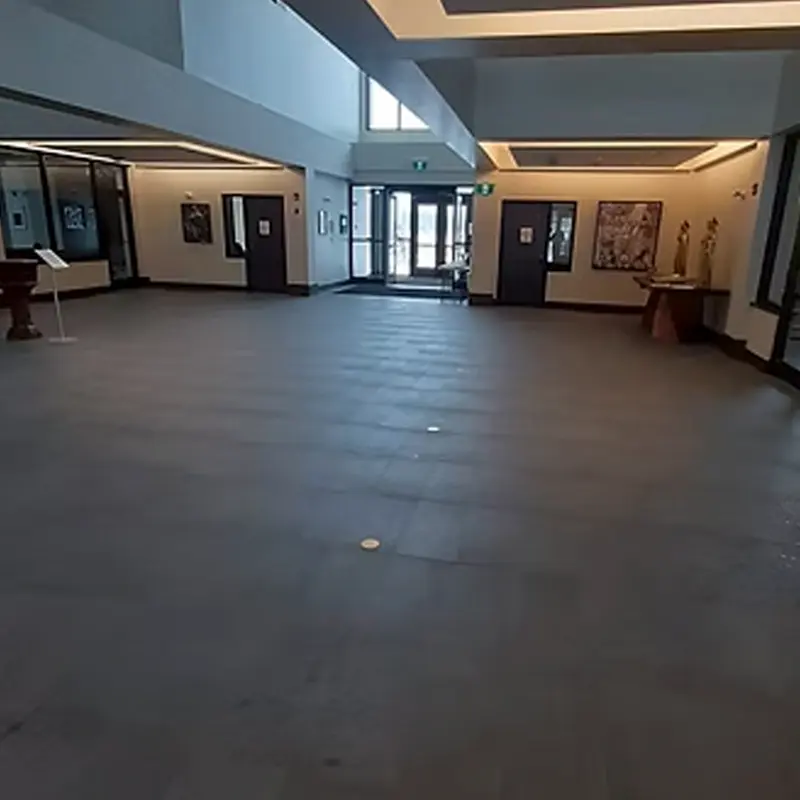
The Narthex
The Narthex is an architectural element typical of early Christian and Byzantine basilicas and churches consisting of the entrance or lobby area, located at the west end of the nave, opposite the church’s main altar. Traditionally the narthex was a part of the church building, but was not considered part of the church proper.
Our narthex is a gathering space for all the meet before and after celebrations, to connect with old friends, make new ones and to maybe also share some food and libations. We gather here to prepare our minds and hearts to join in any celebration in the church proper. It has a number of reproductions framed prints of well known and more obscure Catholic artworks and some exceptional photographic work to complement the marble statuary and the stained glass window that we hope will inspire our visitors and pilgrims.
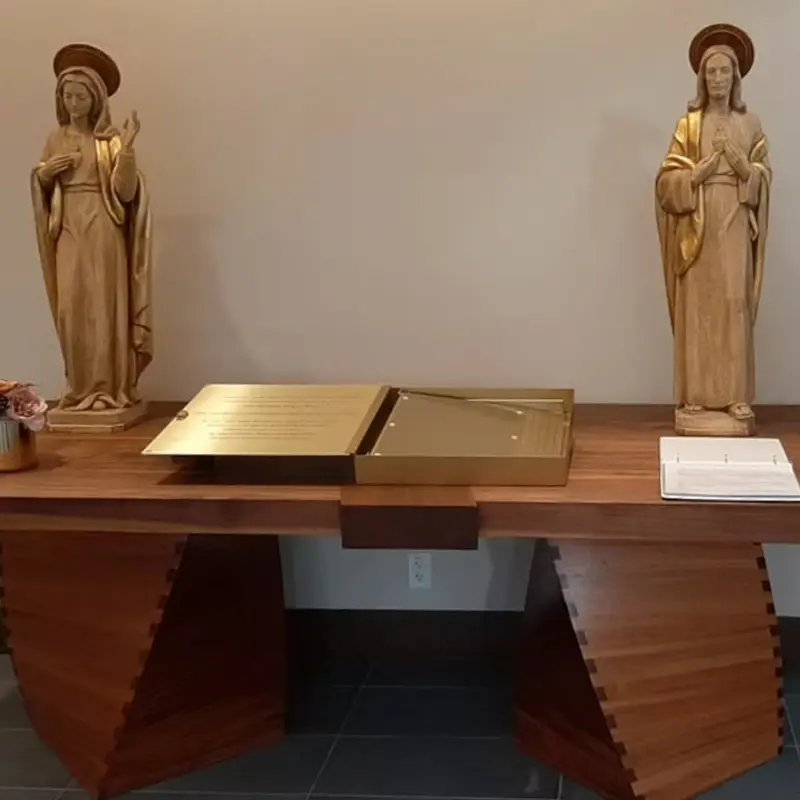
Table of Recognition
We forever grateful for the numerous donors that gave and are still giving towards the building and mission of our Shrine Church! We have created a special table to hold a Book of Recognition that will have inscribed on its pages the names of individual and family donors for our building project .
The table was creatively crafted by some local artisans and the two statues of the Sacred Heart of Jesus and Immaculate Heart of Mary are from our old Sacred Heart Church.
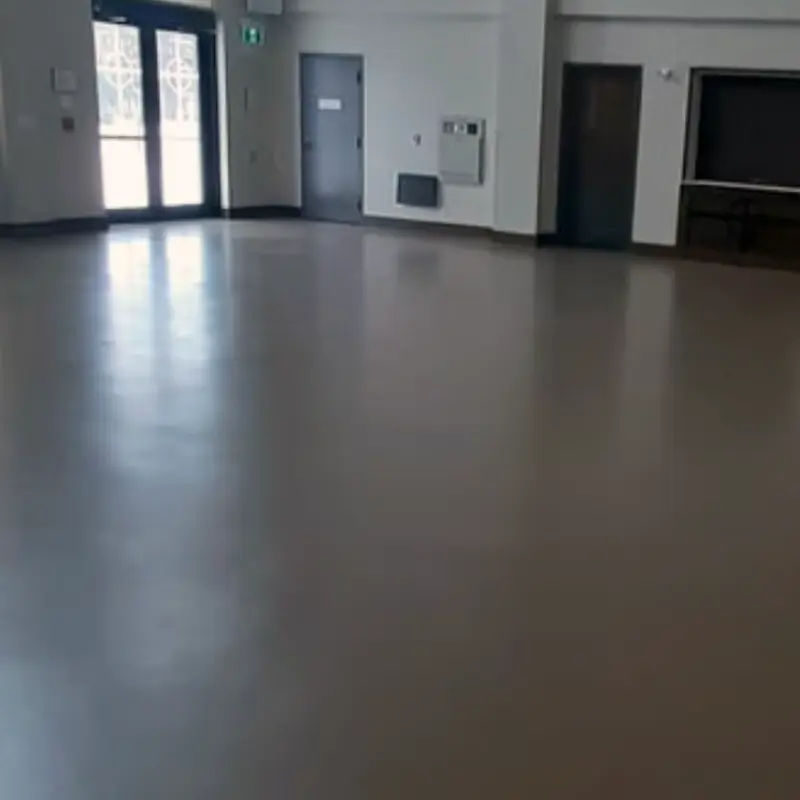
The Shrine Hall
The Hall is where our community gathers to pray or celebrate or mourn. In the Hall we have large screen for presentations, for presenters we refurbished our old ambo from Sacred Heart church, as a lectern. High ceilings and spectacular views from the large windows make it a unique meeting hall in Canmore.
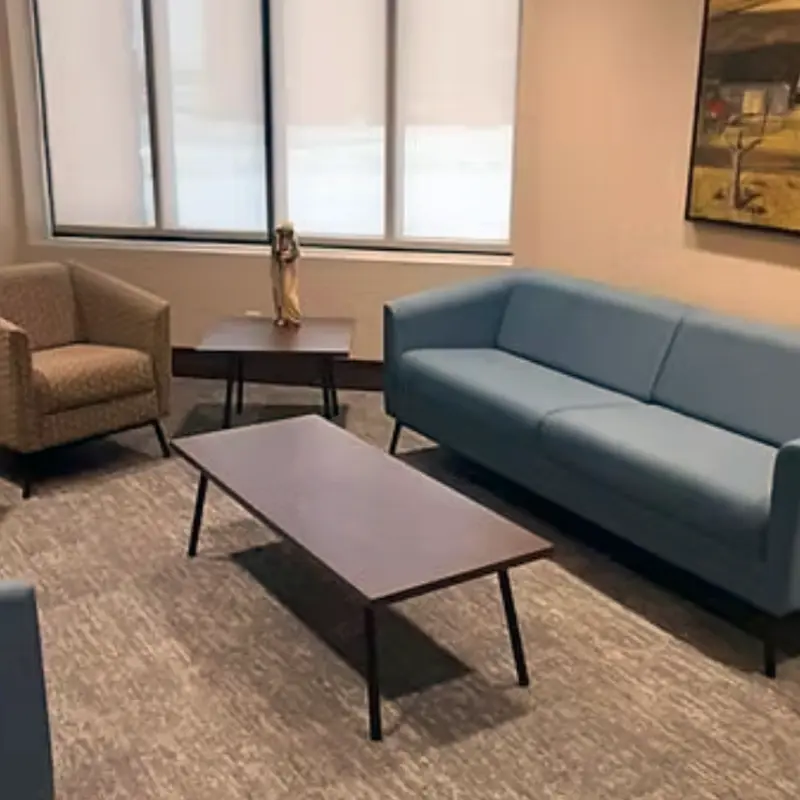
The Kurelek
One of our meeting rooms has some soft sofas and has a small living room ambiance. It is probably of special importance to a prospective bride getting ready for her big entrance or to gather family and loved ones before a funeral. Also a nice room for a small informal meetings among friends.
This meeting room has some special reproductions of the artwork of William Kurelek, who is among the most iconic and respected Canadian artists of the past century.
“Paintings may not have nearly the power to convert people that the printed or spoken word has, but each man has his part to play in the human and divine drama – some persons just a few lines, others whole pages. To refuse to play one’s role at all is not the answer. It is better to light one candle than to curse the darkness.”
William Kurelek
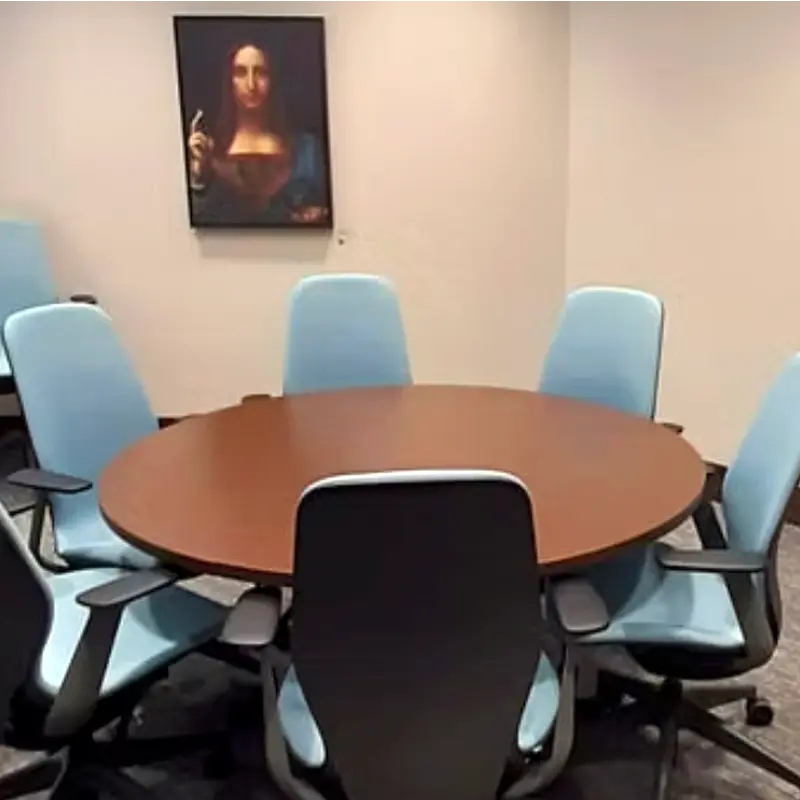
The DaVinci
Off of the narthex there near the nave, is another meeting room room is ideal for a small group discussion for 2 to 6 persons.
This meeting room features two reproductions of well known paintings by Da Vinci and Velazquez.
Matthew 18:20 “For where two or three are gathered in my name, I am there among them.”
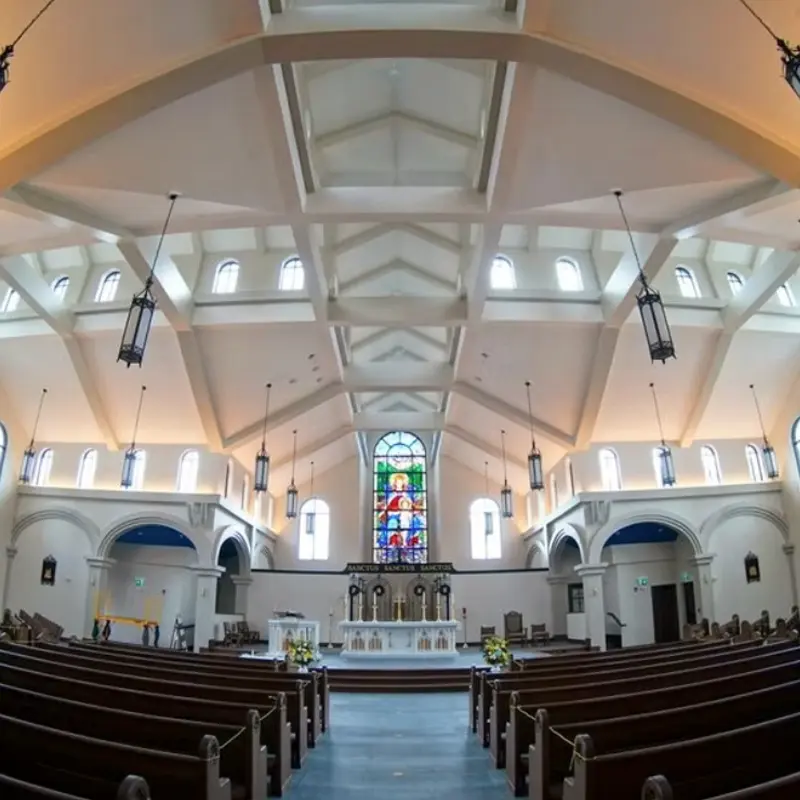
The Nave
The nave of the Shrine Church of our Lady of the Rockies is based on the classic cruciform layout (In the shape of a cross). We can accommodate 422 for a celebration.
It features a face to face style confessional on the west side side and a traditional confessional on the east side. You will also find the St. Anne Family Room for those children that need a little quiet and cool down time during celebrations.
All the marble statues and marble pieces were obtained from two churches built near Chicago and in Buffalo in the 1890s. They were decommissioned in the 60s. The marble was brought to Calgary to refurbish a church there and the overflow was stored in seacans on a farm for close to forty years. The marble is either Italian Carrara marble or marble quarried in Vermont. A well known ecclesiastical artist was hired to clean and restore the statues and to custom build our altars and ambo from the marble pieces.
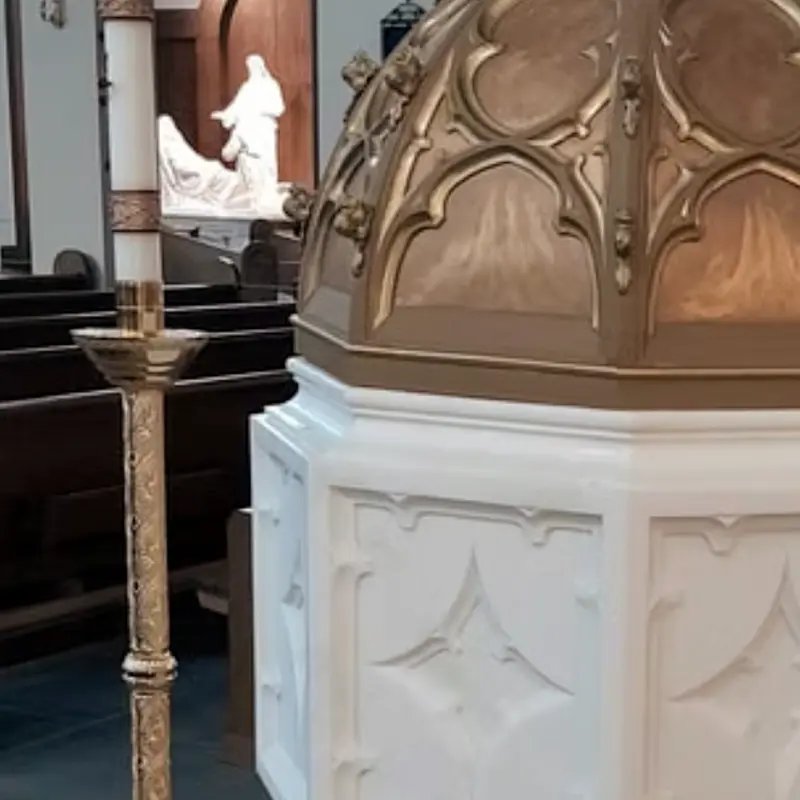
Baptismal Font
Our Font is placed at the entrance of our church’s nave. It is to remind believers of their baptism as they enter the church to pray, since the rite of baptism served as their welcome into the Church.
In many churches of the Middle Ages and Renaissance there was a special chapel or separate baptistry for housing the baptismal fonts, called a baptistery. Both fonts and baptisteries were often octagonal (eight-sided), octagonal fonts becoming more common from the 13th century and the rule from the 14th century.
Saint Ambrose wrote that fonts and baptisteries were octagonal “because on the eighth day, by rising, Christ loosens the bondage of death and receives the dead from their graves”.
The cover was enacted in the name of cleanliness and decoration as well, and, besides a close-fitting, cloth-lined lid, there was demanded in many dioceses an outer dome-like cover, sometimes highly ornamented and draped with a canopy or veil. The repugnance to continued repetition of baptism over a font whose water was to last for ten months, was overcome by providing two compartments, one to contain the Baptismal water, the other, always empty and clean to receive the drippings and drain them into the sacrarium.
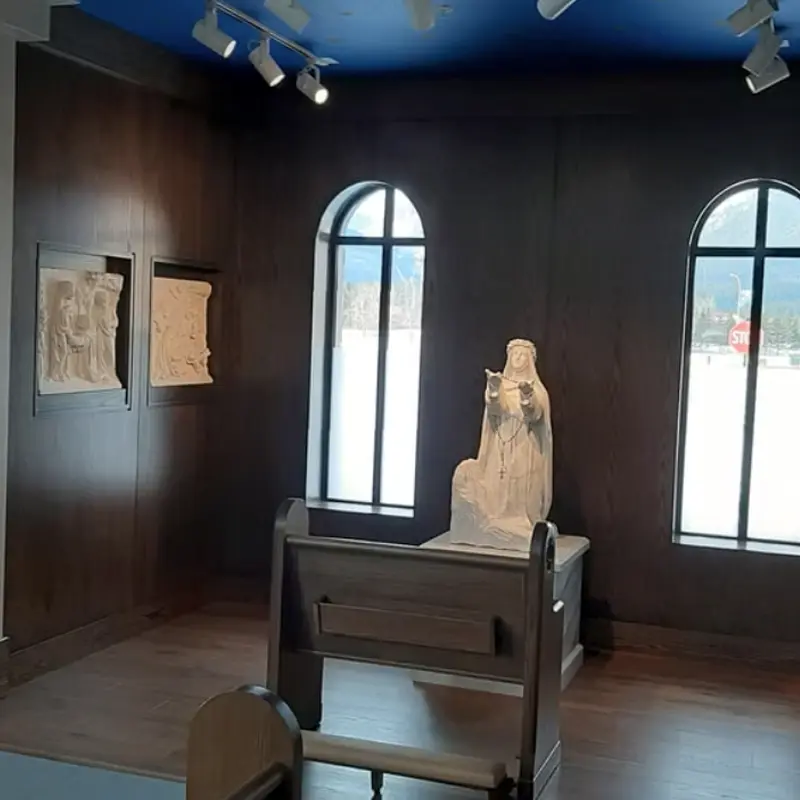
Saint Catherine of Sienna Rosary Sanctum
At the heart of Catherine’s teaching was the image of a bleeding Christ, the Redeemer—ablaze with fiery charity, eager sacrifice, and unqualified forgiveness. And it was not the cross or nails that held Christ to the tree; those were not strong enough to hold the God-Man. It was love that held him there. She records God’s words to her: “My son’s nailed feet are a stair by which you can climb to his side, where you will see revealed his inmost heart. For when the soul has … looked with her mind’s eye into my son’s opened heart, she begins to feel the love of her own heart in his consummate and unspeakable love.”
“Respond to the Holy Spirit who is calling you! I tell you: Come! Come! Come! Don’t wait for time because time isn’t waiting for you.”
– Saint Catherine of Siena
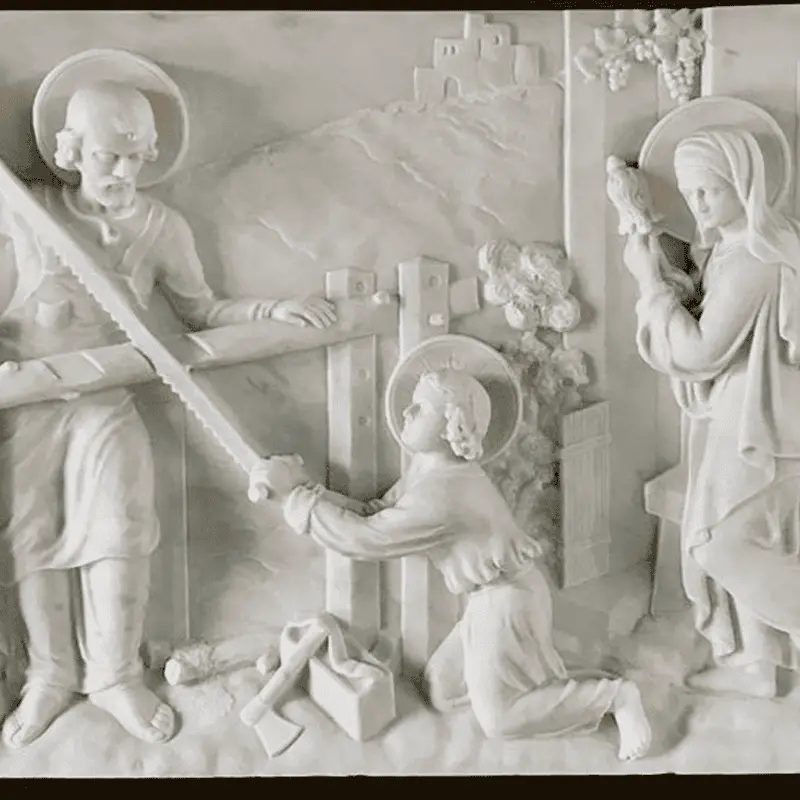
The Four Frontals
These frontals are from a high altar and communion rail from a former church near Chicago. These panels depict the Visitation, the Nativity, the Presentation of Jesus at the Temple, and Daily life of the Holy Family in Nazareth.
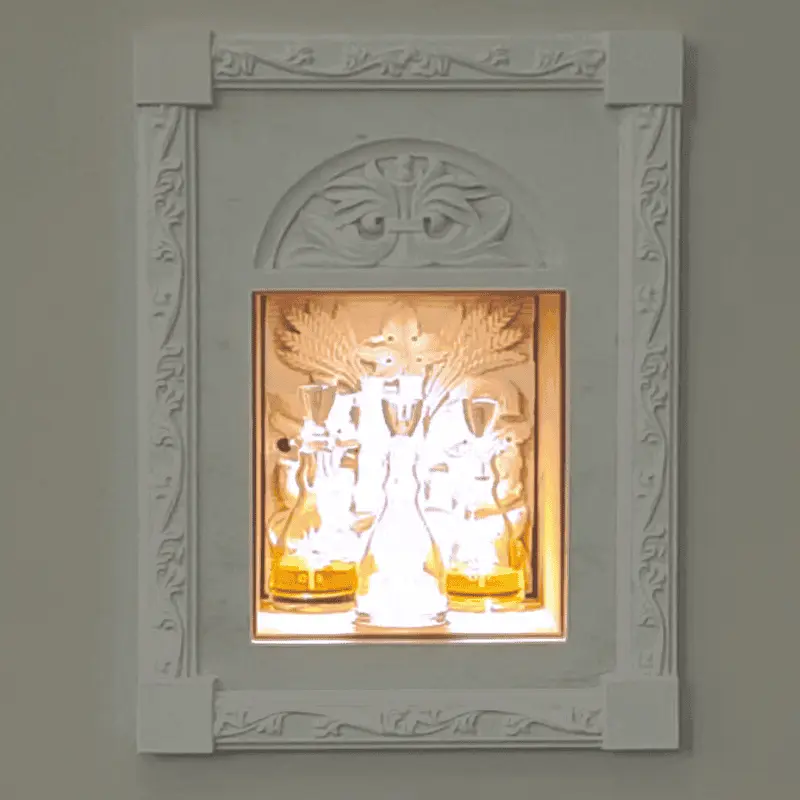
The Ambry
The Church makes use of three holy oils: the oil of the sick, the oil of the catechumens and the holy chrism oil. The first two are blessed, and the bishop consecrates the third, ordinarily during the annual Chrism Mass. Each has a distinctive purpose in the Church.
Oil of the Sick
The oil of the sick, which is pure olive oil, is used for the Sacrament of the Anointing of the Sick. While ideally celebrated with the community during the Mass for the anointing of the sick, this sacrament can be administered any time and in any place. The priest lays hands on the sick or elderly person, says special prayers and anoints the person by placing oil in the form of a cross on the forehead and hands.
Through this sacrament, God gives the sick person grace and strength to bear the illness or infirmity. In addition, many Catholics have witnessed the power of this anointing to bring spiritual, emotional and even physical healing.
Oil of the Catechumens
Both adults and infants prior to baptism are anointed with the oil of the catechumens, which is also pure olive oil.
Holy Chrism Oil
The third oil, holy chrism oil, is olive oil mixed with balsam. The oil symbolizes strength, and the fragrant balsam represents the “aroma of Christ” (2 Cor 2:15). Anointing with chrism oil signifies the gift of the Holy Spirit. It is used to consecrate someone or something to God’s service.
Each year we witness the use of the holy chrism when young people are confirmed, and at the Easter Vigil when adults are confirmed after baptism. Chrism oil is also part of the baptismal rite.
Holy chrism oil is used as well during the ordination of a priest (the Sacrament of Holy Orders) and the consecration of a bishop. It is the anointing used in the consecration of a church and the blessing of an altar and the vessels used at Mass.
The Chrism Mass
Each year the local bishop blesses enough new oils for every parish during the Chrism Mass. The holy oils are then transported to individual parishes, where they are available for use during that year. Though the bishop cannot be physically present at every baptism or confirmation in his diocese, he can be symbolically present through the holy oils he blesses.
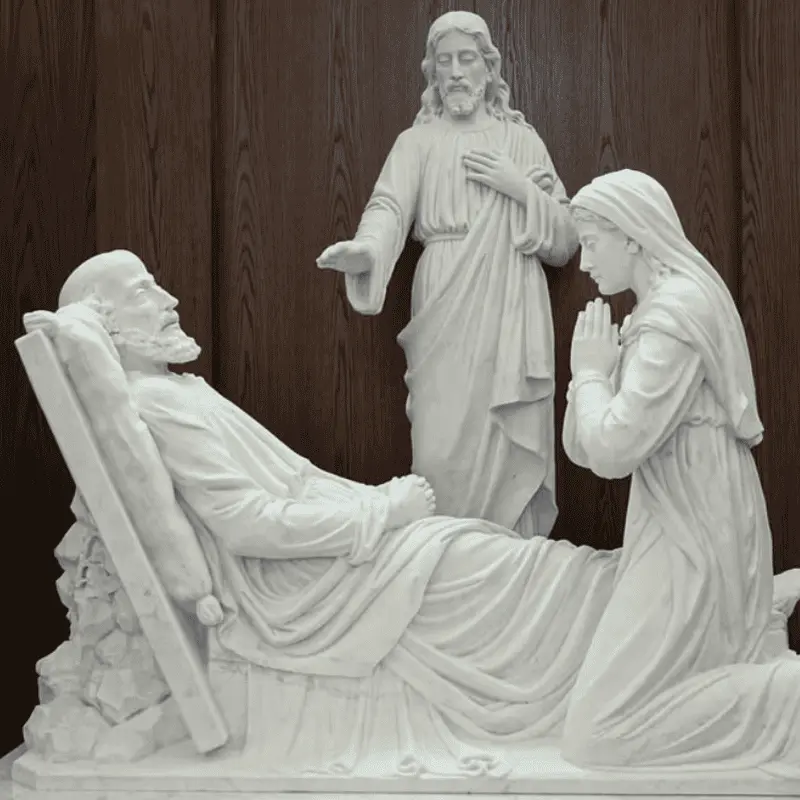
St. Joseph Chapel
The scene is St Joseph on his death bed with Mary praying over him and Jesus giving his blessing.
Matthew’s gospel characterizes him as a “just man” (1:19). He is the patron saint of the Universal Church, and people call upon his aid for workers, families, home buyers and sellers, and the grace of a happy death, among other requests. St. Thomas Aquinas once noted that St. Joseph is unique among patron saints in that he is able to assist us at any time for anything.
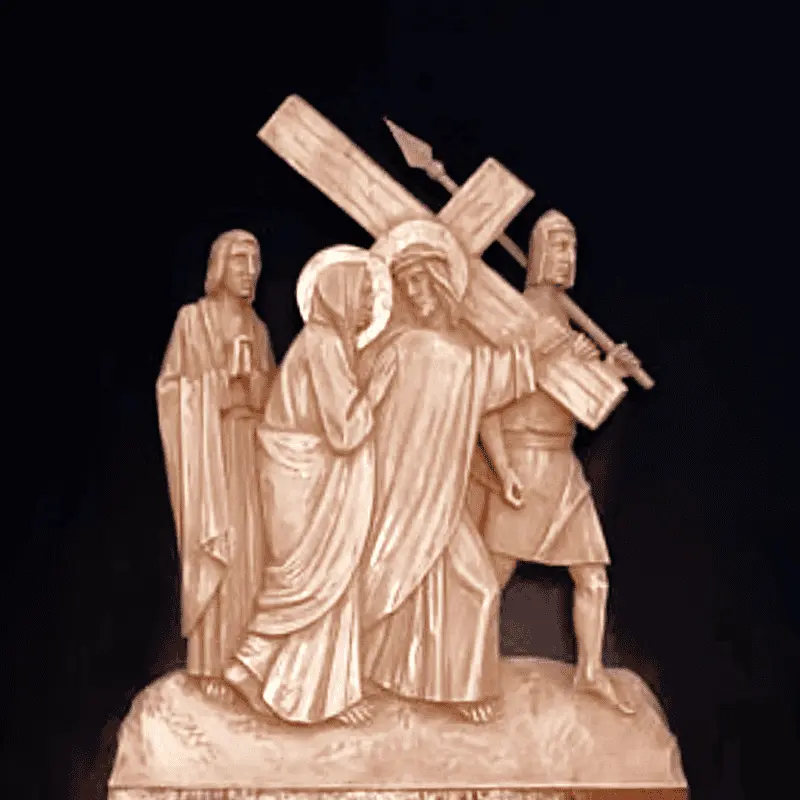
Stations of the Cross
Our Stations of the Cross are from the old church and placed on new wrought iron frames that were custom made here in the Bow Valley.
The Stations of the Cross or the Way of the Cross, also known as the Way of Sorrows or the Via Crucis, refers to a series of images depicting Jesus Christ on the day of his crucifixion and accompanying prayers. The stations grew out of imitations of Via Dolorosa in Jerusalem which is believed to be the actual path Jesus walked to Mount Calvary. The objective of the stations is to help the Christian faithful to make a spiritual pilgrimage through contemplation of the Passion of Christ. Wikipedia
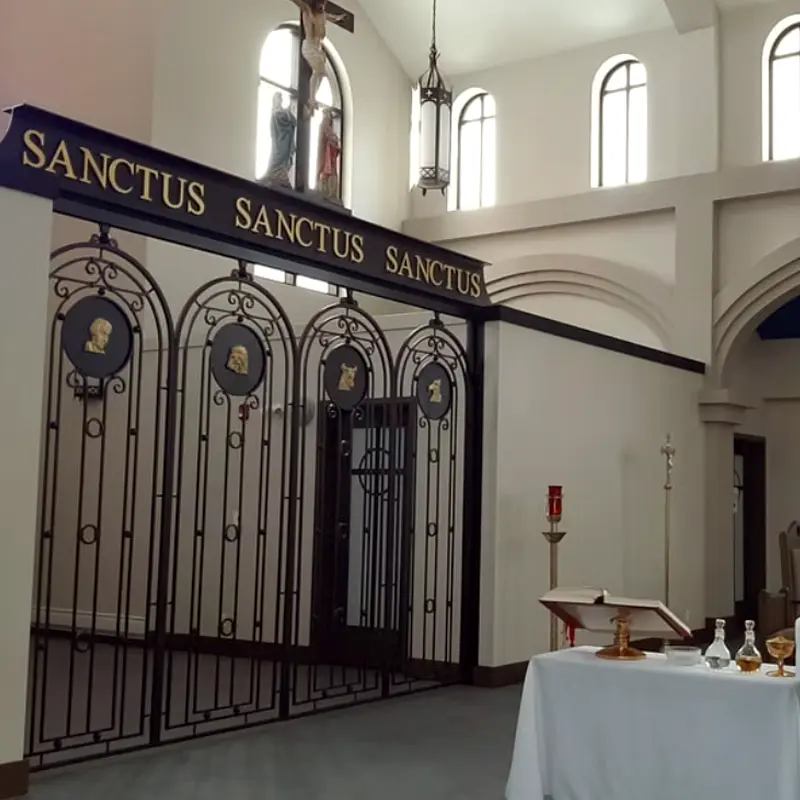
The Sanctuary Gates
Isaiah 6:2 Above him stood the seraphim; each had six wings: with two he covered his face, and with two he covered his feet, and with two he flew. And one called to another and said: “Holy, holy, holy is the LORD of hosts; the whole earth is full of his glory.”
Revelation 4:6 And round the throne, on each side of the throne, are four living creatures, full of eyes in front and behind: 7 the first living creature like a lion, the second living creature like an ox, the third living creature with the face of a man, and the fourth living creature like a flying eagle. 8 And the four living creatures, each of them with six wings, are full of eyes all round and within, and day and night they never cease to sing, “Holy, holy, holy, is the Lord God Almighty, who was and is and is to come!”
Traditions of the Catholic church assign these celestial creatures to the Gospels of Matthew (The Human), Mark (The Lion), Luke (The Ox), and John (The Eagle).
The gate also reminds us of the curtain of the Jewish temple that separated the Holy of Holies from the rest of the Temple. In our case, the gate separates the tabernacle, the new Holy of Holies, from the rest of the sanctuary.
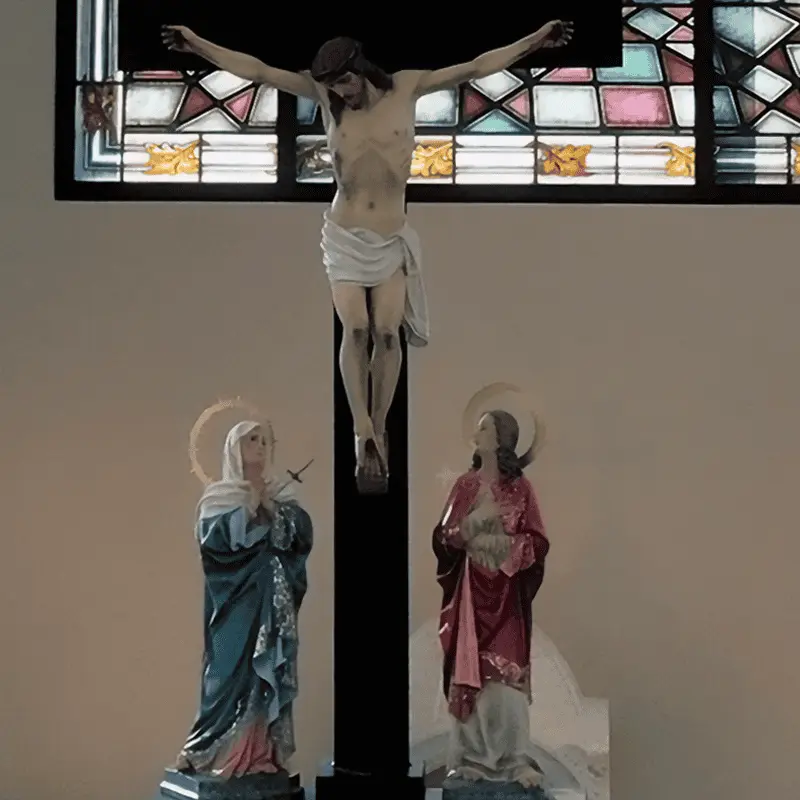
The corpus on the crucifix comes from our old church, Sacred Heart. We have added statues of St John the Beloved and Our Lady of Sorrows at the foot of the crucifix.
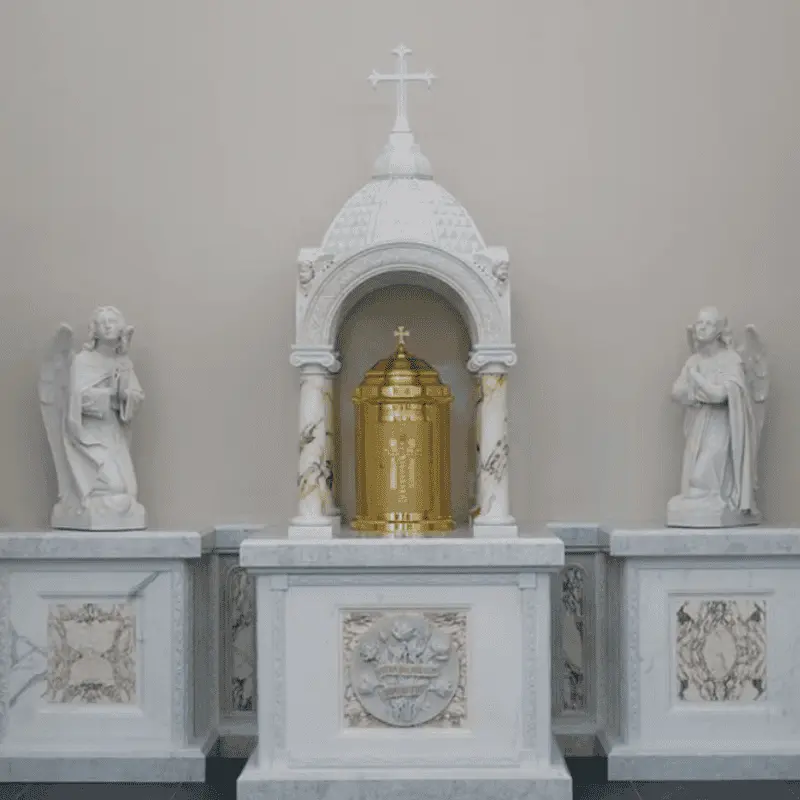
Tabernacle
John 20:12 and she saw two angels in white, sitting where the body of Jesus had been lying, one at the head and the other at the feet.
We are blessed that we also have two angels guarding our tabernacle! The baldacchino standing above the tabernacle reminds us of the tent like booth that the People of Israel set up in the desert and where they housed the Ark of the Covenant.
At various occasions, this area will serve as a space for Eucharistic Adoration, allowing for a close and intimate encounter with our Saviour, present in the Most Blessed Sacrament.
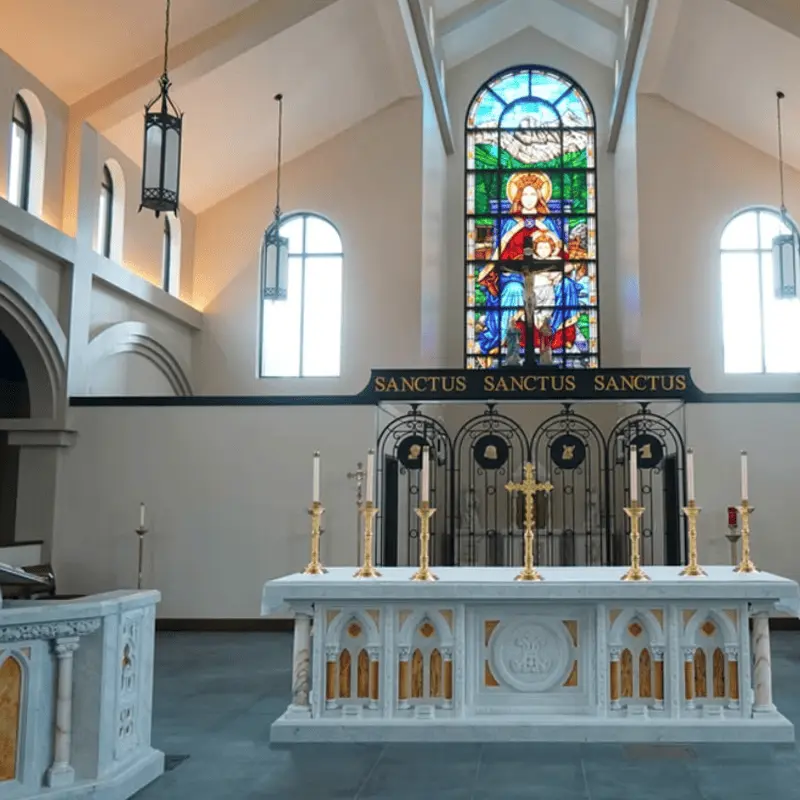
Altar, Ambo and Celebrant Chair
As we were unpacking the marble from the storage containers we discovered the beautiful AM centre piece. The restoration artist decided that it had to be our altar centre piece due to the Marian designation of our shrine church. It is also a sign that it from Mary that we receive Jesus, for she is the New Ark of the Covenant from which came the True Manna, the Body and Blood of Jesus Christ, present in the Most Holy Eucharist.
Our artist, Josef Rubenstien, custom built the ambo and altar from the marble inventory, using similar styles of marble and colour finishing to remind us of the intimate connection between the proclamation of the Word and celebration of the Eucharist at each and every Mass.
The celebrant chair was chosen to match our pews and built by the same company.
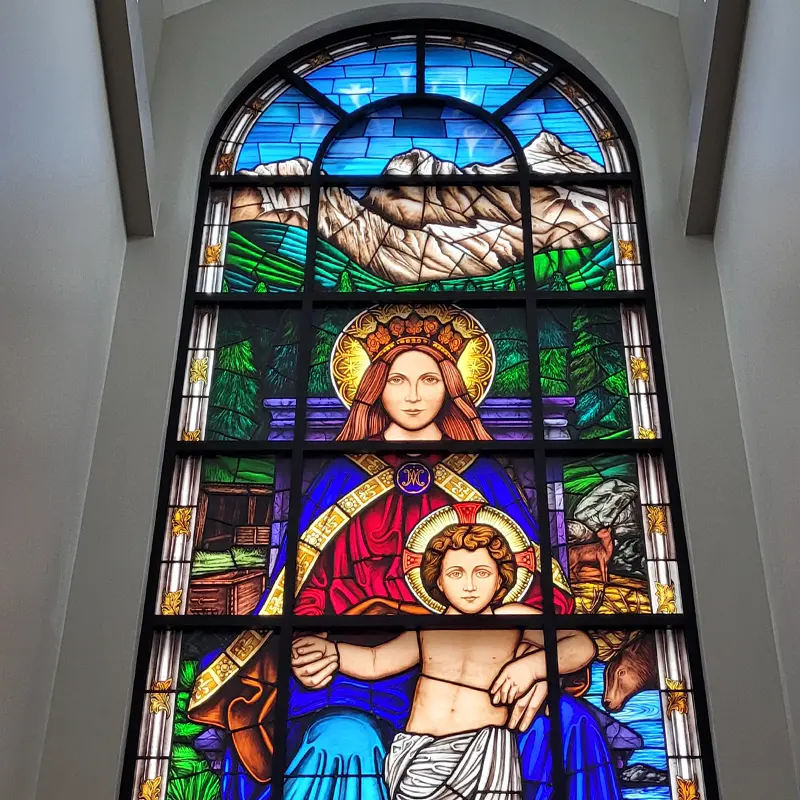
Stained Glass Window
Our stained glass window is our representation of OUR LADY OF THE ROCKIES. It is the shrine’s primary devotional image dedicated to Our Lady under this title.
It was custom designed to reflect our location in the Rockies. We celebrate our mining history with the inclusion of the mine shaft and coal mine cars on the left of Mary. We also acknowledge our local fauna and wild life with the elk and the deer. The Three Sisters mountains appear at the top of the window and the actual Three Sisters can be seen through the two smaller windows on either side of the stained glass window.
The upper sky portion of the window is special for us because these cloud formations appeared during an outdoor mass that we celebrated on this site before the construction of our building. These “angelic” formations only appeared for about fifteen minutes during the homily and then disappeared.
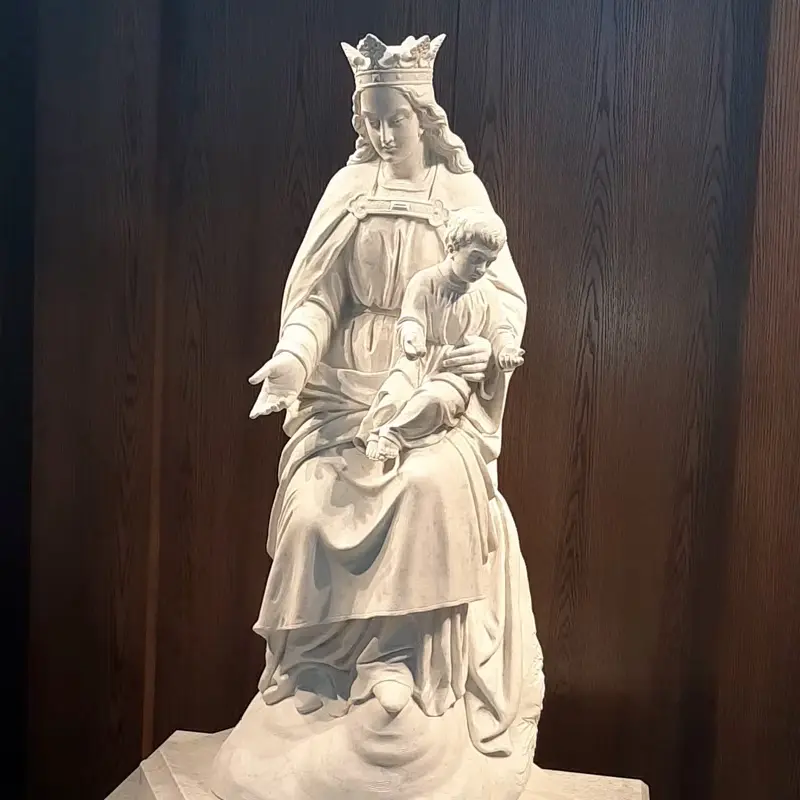
Mary Queen of Heaven Chapel
While holding the infant Jesus, their hands reach out to us to receive our humble prayers and petitions.
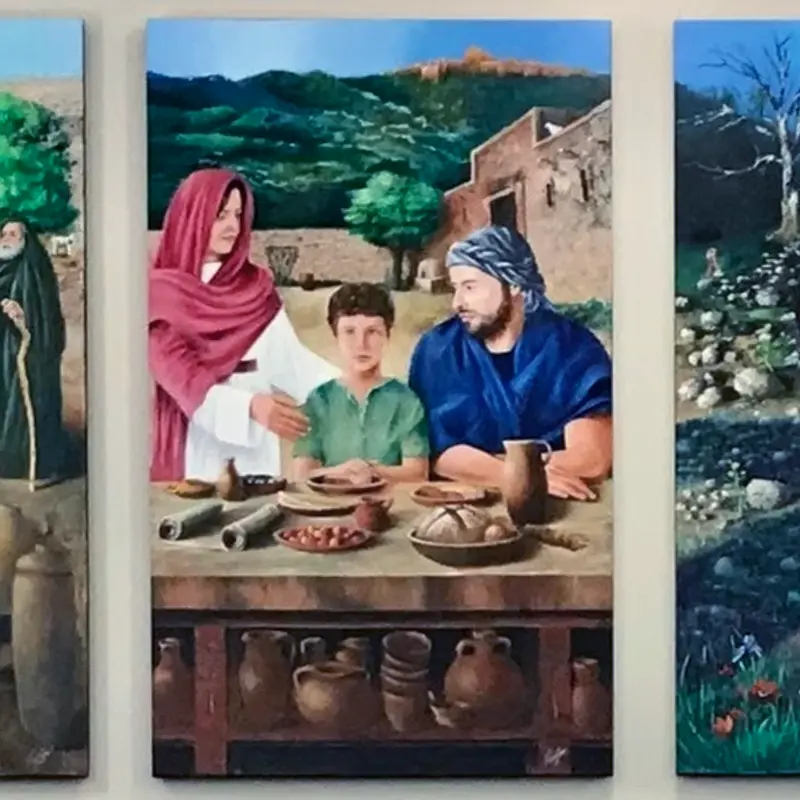
The Four Marian Panels in the Shrine Nave
Two artists spent over a year creating these four panels, each capturing a sacred moment in the life of Mary.
Panel One shows Mary with the young Jesus. In the background are her parents, Saints Anne and Joachim. An Old Testament prophet appears in the corner, pointing to the coming of the Messiah.
Panel Two depicts the Holy Family at a traditional Jewish meal. Above them is Sepphoris, a nearby city where Joseph and Jesus worked as carpenters.
Panel Three focuses on Mary and St. John the Beloved at the foot of the Cross. The scene recalls John 19:26–27, “Woman, behold your son. Son, behold your mother.” Where Jesus entrusts His mother to John. A fig tree and the shadow of the Cross deepen the symbolism.
Panel Four portrays the Coronation of Mary as Queen of Heaven and Earth. The Resurrected Christ is present, and the scene is reimagined in the Bow Valley—bringing the mystery of heaven into our own landscape.
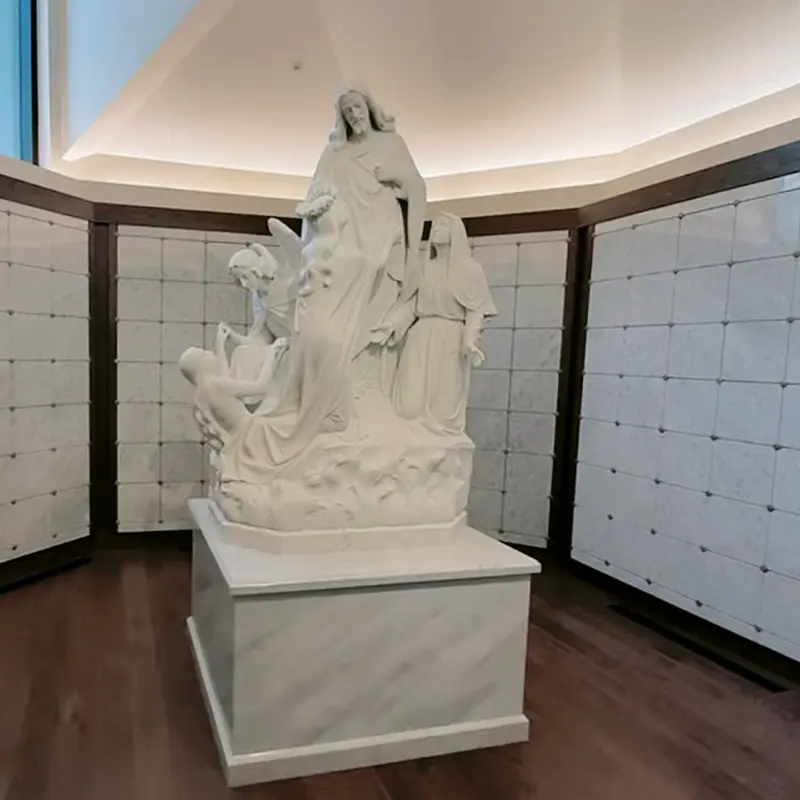
Columbarium
The statue here is of Jesus lifting the saved souls from purgatory. One souls is being crowned by our Lord as a sign that she has passed through purgatory and is ready to enter the Kingdom of Heaven.The other soul is being consoled by the angel as she continues to undergo the necessary purgation of the temporal punishment due to her sins. Our Holy Mother is also present to intercede for the Holy Souls in Purgatory. Notice the flames of purgatory on the base.
The estimated weight of this single piece statue is about 9,200 lbs and it was carved in the late 1890’s or early 1900’s by the Daprato Company of Chicago.
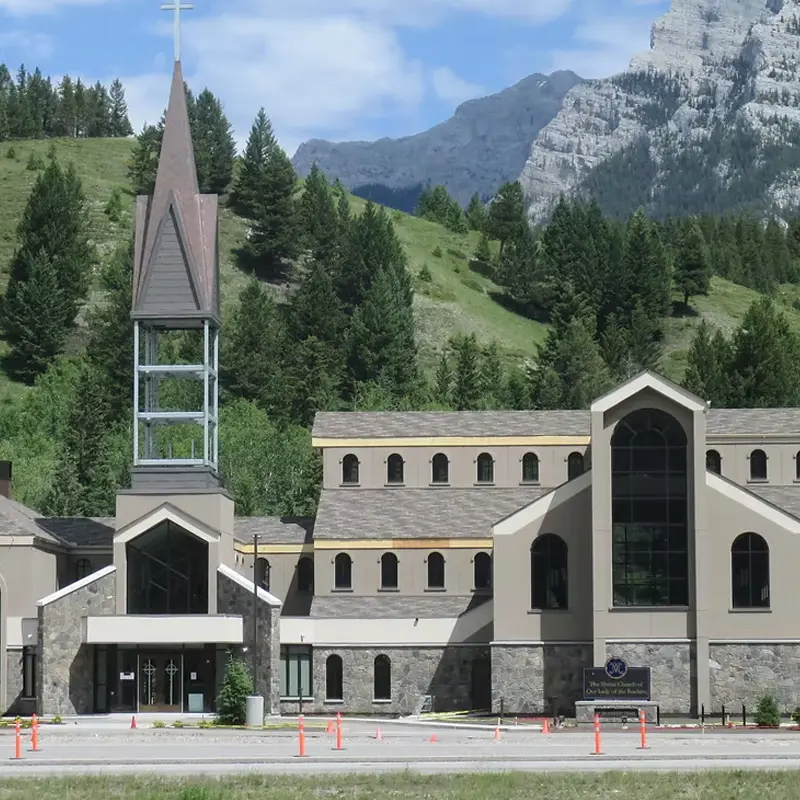
Exterior of Shrine
The rock work on the outside of the building comes from a local quarry, Kamenka Quarry, located just to the west of our location in Harvie Heights. It was the same source of the rock work for our original Sacred Heart church that was downtown.
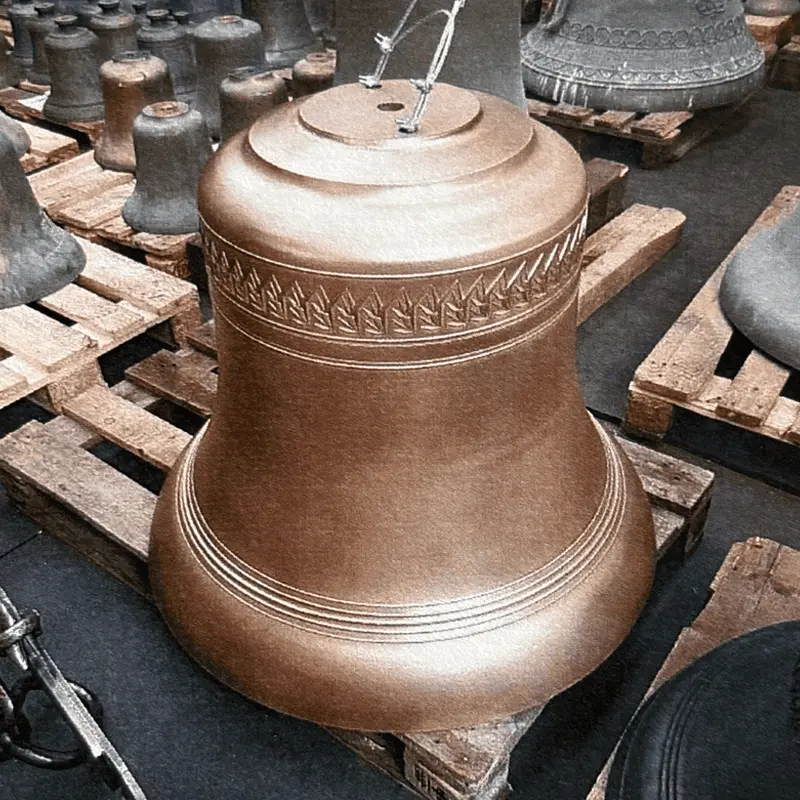
Shrine Bells
The smallest bell is from our original church of Sacred Heart. It is named in honour of The Immaculate Conception and St. Bernard of Montjoux.
The second bell comes to us from the USA. It was part of our discoveries in the storage containers of the purchased statues and marble for our project. It is named in honour of St. Kateri Tekakwitha.
We purchased the third bell from Holland to match the tones of the other two bells. It is named in honour of Bl. Pier Giorgio Frassati.
We have them preprogrammed to ring at the start of each mass, the Angelus, and Remembrance day. We also can ring them for weddings and funerals. We also have the option to free swing them or hammer them.
Historical items from Sacred Heart Church
An effort was made to bring some items in our pilgrimage from Sacred Heart Church, Canmore to our new shrine.
As you visit the shrine you will find:
The two statues of Jesus and Mary from the front of the old church, now refurbished and sitting on the table of recognition.
The corpus of Jesus Christ was removed from the old crucifix and mounted on a new one above the SANCTUS SANCTUS SANCTUS gate.
The baptismal font that was originally in St Bernard’s in Exshaw, now refurbished as a table of offerings.
The ambo has been refurbished and will serve as a lectern in our hall.
The incense thurible and stand were relocated to our shrine for outdoor processions.
The processional candles will be used as outdoor processional candles.
The altar chalices and ciboriums are now used on our new altar for the Holy Sacrifice of the Mass.
Some of the old paintings can be found in the vestries/sacristies.
The outdoor rockwork was salvaged and will be used in our landscaping projects.
The steel Sacred Heart statue that was mounted on the outdoor wall of Sacred Heart will be relocated on our new site.
The relic stones from the former altar at Sacred Heart and Holy Trinity Church, Bankhead (closed 1922), were placed inside the new altar.
The small bell, part of the Bishop Grandin legacy, was refurbished and mounted in our bell tower.
Special mention: The former altar will be refurbished and used by St. Gabriel’s Parish in Chestermere.